
Author
Hongji Feng

Share

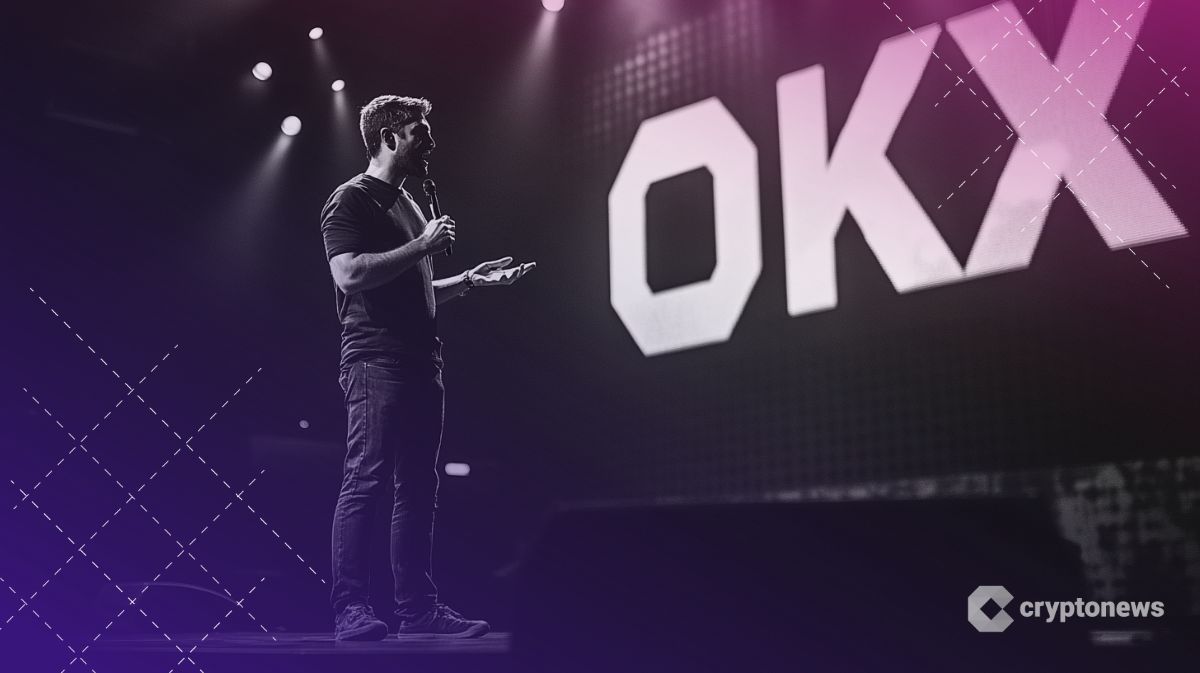
During Abu Dhabi Finance Week, OKX Chief Executive Star Xu said, “approximately 50% of global economic activities will operate on blockchain” in the coming decades.
He framed the shift as demand from a generation raised on digital services, mobility, and artificial intelligence. Xu described blockchains as programmable financial rails that move value “freely, instantly, and globally, 24/7.”
He positioned the trend as infrastructure, not a trading call, pointing to stablecoin settlement growth, multi-trillion on-chain asset values, and expanding wallet counts. He also noted ongoing regulatory work in major markets that is building channels for compliant activity.
Why OKX’s Xu Sees Demand For On-Chain Finance
Xu linked the moment to past cycles in internet, mobile, and cloud, arguing the next step is a “financial internet” where storage, transfer, and settlement are software-driven and auditable.
He said current infrastructure can meet institutional needs, citing account integrations, low-friction user flows without gas fees, and throughput targets measured in millions of transactions per second.
Security goals mirror bank accounts, while on-chain identity, analysis, and audit features are intended to raise transparency. His view is that open and efficient systems tend to win over time, and that the internet generation is pressing finance toward an always-on standard.
He added that regulators in jurisdictions such as the United States and Singapore are building frameworks that move activity from pilots to production.
Bitcoin, Stablecoins, And Tokenization In Practice
Xu called Bitcoin “digital gold” for younger holders and pointed to institutions adding exposure on balance sheets. He portrayed stablecoins as a parallel payment channel that allows near real-time cross-border settlement, including units tied to the U.S. dollar and regional fiat.
He placed tokenization at the center of market structure change, with funds and government bonds entering continuous on-chain venues that offer transparent pricing and compliance controls.
Looking ahead, he outlined a model where users hold self-custody wallets, identity is portable, and issuance and settlement run on a single base layer.
“More open, transparent, and efficient systems will ultimately prevail,” Xu said, adding that the internet generation is already building toward that outcome.
Trending News
RecommendedPopular Crypto TopicsPrice Predictions
Be the first to comment